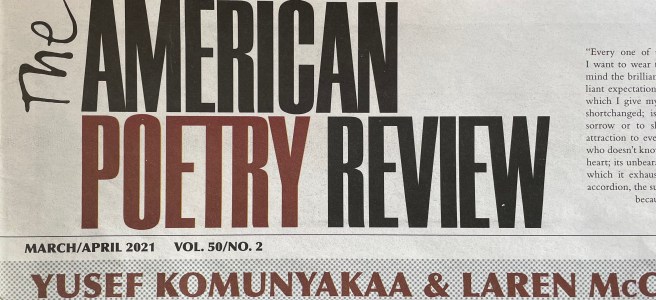
My thanks to the American Poetry Review for a concept – ‘zuihitsu’ – which, if I’ve understood it properly (and I’m not sure I have) has a lot in common with much modern poetry, not to mention blog-writing.
It comes from an article by Kimiko Hahn called ‘The zuihitsu and the toadstool’. The definition she comes to at the end of the piece is this:
‘Zuihitsu, literally, “running brush”: this uniquely Japanese genre is a poetic text lacking the formal structural principles we associate with Western verse. Through a variety of techniques – fragmentation, juxtaposition, varying lengths, disparate forms (observation, anecdote, journal, catalog, …. and a hybrid text), and an organising subject — it creates an impression of spontaneity and a quality of “imperfection”.
The description bears an obvious relation to Ezra Pound’s Cantos, to Charles Olson’s Maximus Poems, or to Marianne Moore’s use of quotation. But among contemporary poets it makes me think of the mixture of prose and poetry in Anthony Anaxogorou’s ‘After the Formalities’ or Rachael Allen’s ‘Kingdomland’, and of the weaving in of historical quotation in Jay Bernard’s ‘Surge’ and Sasha Dugdale’s ‘Deformations’. Jay Bernard uses contemporary reports of the New Cross Fire in 1981. Sasha Dugdale works with material from the writings of the engraver and artist Eric Gill.
Some other ways of describing ‘zuihitsu’:
‘ Stray notes, expressing random thoughts in a casual manner’
— Makoto Ueda in ‘Principles of Japanese Literature’
‘the aesthetics, if you will, of formlessness’ — Linda Chance
‘In everything, no matter what it may be, uniformity is undesirable. Leaving something incomplete makes it interesting, and gives one the feeling that there is room for growth’.
— Kenko in ‘Essays in Idleness’
Which allows me to ignore the usual wish to summarise and conclude.

 the word-road home