Edwin Muir ‘Late in the evening the strange horses came’
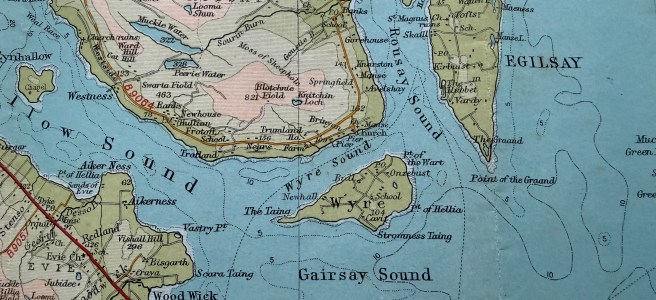
In a time of Trump, Gaza, Iran, I’ve been reading the 1950s novels of John Wyndham: The Day of the Triffids, The Chrysalids and The Midwich Cuckoos. It seemed apposite, all that post-apocalyptic fear, Cold War angst, the aftermath of a dreadful, unnatural mistake or catastrophe. And I wondered where that feeling went in the … Continue reading Edwin Muir ‘Late in the evening the strange horses came’
‘an Archangel – a little damaged – igniting the dark firmament with speech’

’Joseph Conrad - A Personal Remembrance’ by Ford Madox Ford, written immediately after Conrad’s death, published 1924. I bought it in a secondhand bookshop at The Guildhall in Lavenham (Suffolk). Ford is always engaging, entertaining and completely unreliable. So these comments may have no basis in fact, but this is what he says Conrad thought … Continue reading ‘an Archangel – a little damaged – igniting the dark firmament with speech’

’If I don’t speak to/the darkness it/swallows me.’

At the beginning of October I was at the LRB bookshop for the launch of Sarah Howe’s new collection ‘Foretokens’. Towards the end a young woman at the front asked a really good question; it came from inexperience but was all the better for it. She said she’d only previously read the kind of poetry … Continue reading ’If I don’t speak to/the darkness it/swallows me.’

’an ancient, woven, wet, ditch-dance’

Elizabeth-Jane Burnett’s book ‘Twelve Words for Moss’ is not exactly a scientific book, although it contains a lot of botanical information. It’s more a series of meditations on moss and (trying to delay too-glib a rhyme) loss, specifically the loss of her father. Both nature writing and grief memoir, it is also interspersed with Burnett’s … Continue reading ’an ancient, woven, wet, ditch-dance’

’It persists as anomaly, as conscience, as critique and as refuge’

’It’s almost impossible to say why certain music attracts me, or interests me, and other things leave me cold. The process of criticism is heavily dependent on a rationalisation of subjectivity. As a critic, you can spend your life prioritising your own tastes with increasingly elaborate intellectual justifications that disallow any alternatives’. That’s David Toop, … Continue reading ’It persists as anomaly, as conscience, as critique and as refuge’

‘I am perfectly willing to appear ridiculous, absurd’: Roethke’s prose.

Having devoted the previous post to poets writing about Theodore Roethke, I found yet another poem. Richard Murphy’s ‘The Poet on the Island’ is dedicated to him:‘On a wet night, laden with books for luggage, And stumbling under the burden of himself, He reached the pier, looking for a refuge. ………………. Safety on water, he … Continue reading ‘I am perfectly willing to appear ridiculous, absurd’: Roethke’s prose.